England 2025: Creating a Movement not a Moment
Stories from the biggest ever Women's Rugby World Cup


On September 26, 2025, Black Ferns co-captain Ruahei Demant finished her Bronze Final press conference tongue-tied and glassy-eyed. Her New Zealand side hadn’t retained their world champions status, but knowledge of the bigger picture, an era-defining Women’s Rugby World Cup, had engulfed the number 10 and left her on the verge of tears.
For six weeks of last summer, the eyes of the sporting world were transfixed by 16 teams gunning for glory at ‘ENG ‘25’. With the slogan: ‘This Energy Never Stops’, the tournament celebrated the exceptional growth of women’s sport, as well as the unique personalities and incredible athletes within women’s rugby.
From shock upsets to breakout stars, sell-out crowds to record-breaking TV figures, the 10th edition of the Women’s Rugby World Cup wasn’t just the biggest in its history, but the tournament that would change the narrative on what women’s rugby could be forever.
England defeated Canada in front of a record crowd of 81,885 in Twickenham to be crowned world champions on home soil- but they weren’t the only winners to walk away from the tournament. Increased visibility and funding in the months following the final have changed the trajectory of women’s rugby across the globe, and as the one-year anniversary of kick-off in Sunderland quickly approaches, the sport continues to trend upwards.
The 2025 Women’s Rugby World Cup was just as big a success off the pitch as it was on it, and its legacy will be felt in England and beyond for generations to come. Below is a collection of stories from voices around the globe who are all united through England 2025, from those closest to the action on the field last summer, to others who have overseen the transformation of women’s rugby for over half a century.
England 2025 at a Glance
16 teams. Eight venues. One record-breaking event.
Over 34 years after the Cardiff Arms Park hosted the inaugural championships across the border in Wales, 2025 marked the year England would stage their second-ever Women’s Rugby World Cup. After Covid-19 disrupted the 2021 tournament, delaying it to 2022, fans and players alike would have probably welcomed an event that returned to normality in England.
But normal wasn’t going to cut it at this World Cup
With a goal to elevate the profile of women’s rugby globally, the stakes in this competition were raised to unprecedented levels before players even set foot on the pitch. Team numbers increased from 12 in 2021 to 16 in 2025, and a record eight host cities were announced across England.
Ground-breaking technology, like the introduction of flashing LED mouthguards, put additional emphasis on player welfare and injury reduction. While enhanced match coverage increased global viewing figures by 336% compared to the previous World Cup. It wasn’t just the players who were making this tournament better - it was the organisers too.
As the competition progressed, two teams established themselves as potential cup winners. Canada cruised to their second-ever Rugby World Cup final after taking out rugby heavyweights Australia and defending champions New Zealand. While hosts England went untroubled to the semi-finals before overcoming a resilient French outfit to set up a replay of the 2014 final.
The outcome, unfortunately for the Canadians, would be the same as the final 11 years prior, as England rallied after an early setback to clinch their third ever World Cup on home soil.
From Sunderland to Brighton, fans turned up in their thousands to catch a piece of the action, as new audiences discovered women’s rugby for the first time. Organisers selected host cities so that 95% of England’s population were within a two-hour drive of a tournament venue, pricing 60% of match tickets at less than £25 so women’s rugby would be accessible to all.
20 of the 25 matches at the 2025 Women’s World Cup sold out, generating incredible atmospheres across the country. Never before had over 440,000 people turned up to a Women’s Rugby World Cup, and players and coaches alike took notice of the incredible support.

A South African Triumph

While success is often measured by whether you win a tournament, last year South Africa achieved something that meant so much more than becoming world champions.
On Sunday, 31st August 2025, the Springbok Women faced Italy in what will forever be remembered as one of the most important days in South African Rugby history. One summer’s afternoon in York changed everything for the 15 players on the field - and millions of women and girls across all of Africa.
Although their country is one of the greatest rugby nations of all time, the women's national team haven’t shared nearly the same success as their male counterparts. Before last year’s tournament, South Africa had never previously escaped the pool stages at a Women’s World Cup, and had only a handful of wins in their four tournament appearances.
But in a year defined by rewriting the record books, the ladies in green and gold exceeded all expectations and qualified for the knockouts of a World Cup tournament for the first time ever.
Their journey to becoming history-makers started long before the World Cup, with a significant appointment in the coaching setup. Laurian Johannes-Haupt was a former international rugby player who represented South Africa in the 2010 Rugby World Cup. After retiring, she took charge of the junior Springboks as head coach, before being appointed as the full-time assistant coach for the women’s team in January 2025.
“I’d been a contracted coach since 2021, and then in 2025 we decided it was best for me to cross over and do it full time,” she said.
“It was absolutely a proud moment for me, but it’s more like: okay, you’re the first, who else is joining you?”
Her appointment as the first female coach in South Africa’s national team history offered the squad valuable World Cup experience. But a lot can change in 15 years, and Johannes-Haupt admitted that although both competitions were hosted in England, last year’s tournament was completely different from the one she played in.
“When I played, we were at Surry University,” she said. “There was a lack of visibility, a lack of people knowing what you’re doing there. The support for the English team was good because they’ve been doing it for so long, but for us as South Africans, I don’t even think people knew we were playing at a World Cup.
“This time, it was more than a tournament. It was bigger and better than we could have expected it to be. There was acknowledgement, there was fans, there was family supporting us. England gave us a World Cup we could be proud of, we were so blessed to be at a showstopper event.”
South Africa huddle before their World Cup opener vs Brazil. Picture by Paul Harding
Picture of Laurian Johannes-Haupt, the first female coach in the South Africa national team. Photo by Gallo Images
Libbie Janse van Rensberg clebrating a try against Brazil. Photo by David Rogers
“We knew going into the tournament that the Italy game would be the make-or-break,” recalled Johannes-Haupt. “We come from a strong culture of dancing, singing and celebration. So even before the match, the girls were doing a Gwijo, doing what they needed to do to bring success.
“That was for sure the best ever result we’ve had as Springbok women. The changing room was electrifying, the girls were genuinely happy, singing, dancing and rejoicing - and that’s our team.”
South Africa’s World Cup fairytale would unfortunately come to an end soon after, losing the final pool game to France and before eventually overpowered by reigning champions New Zealand in the quarter finals.
But beyond their World Cup success, this South African team sparked change back home and delivered performances to inspire the next generation of rugby players:
“Our union now is making things happen because of the result we obtained at the World Cup.
“Because of that result, the game has evolved and changed so much in a South African context. There’s a hunger for the game, we’ve got people actually watching women’s rugby. We’ve got competitions running now that were never happening before, our junior structures are being put in place better - there’s just a whole lot of hype around women’s rugby!”
A triumphant tournament would be nothing without some top performances, and the ladies from South Africa truly delivered when it mattered most. When the Springbok Women arrived on the pitch for their first match in Northampton, they produced an emphatic win against World Cup debutants Brazil. Their game had everything, from 10 tries, to a hat-trick from a loose forward, and an even appearance from the famous ‘Bomb Squad’.
Leezil Hendricks, a South African journalist at rugby365, was present for every game of South Africa’s World Cup campaign and remembers the energy inside Franklin’s Garden for their opening weekend win.
“During the week, there was a festival vibe. I labelled it the festival match because Brazil and South Africa are two countries that love to party,” Hendricks recalls. “The support in Northampton was big because everywhere was full of South Africans, it didn’t feel like we were away, it felt like we were at home.
“I think that’s what gave (the players) the confidence to go out and enjoy themselves. I remember the coach saying, ‘if the players are enjoying themselves, they’re going to win’, and you could see that on the field.”
With just one win in their remaining two fixtures needed to qualify for the knockouts, the Springbok Women were on the edge of creating history. Just two tests against world number seven Italy and world number four France stood between them and rugby immortality in South Africa.
But so much more was on the line than just World Cup success. As one of two South African representatives at the tournament covering the Springbok Women, Hendricks knew the monumental changes a positive result could bring.
“I think I was probably the only South African journalist at the World Cup covering the ladies, I was the only one, along with a radio station that provided coverage,” she said. “If it was the men, it would be like 20.
“It was the biggest game of their lives, if they fail, it justifies the reason why we’re not backing women’s sport.”
And so came South Africa’s second game, a colossal battle against Italy. Fans packed inside the LNER Community Stadium for what would transpire to be one of the games of the tournament. The Springbok Women led from the very first minute and, despite being reeled back to level terms twice by a resilient Italian side, scored a 73rd -minute try to confirm their World Cup quarter-final status.

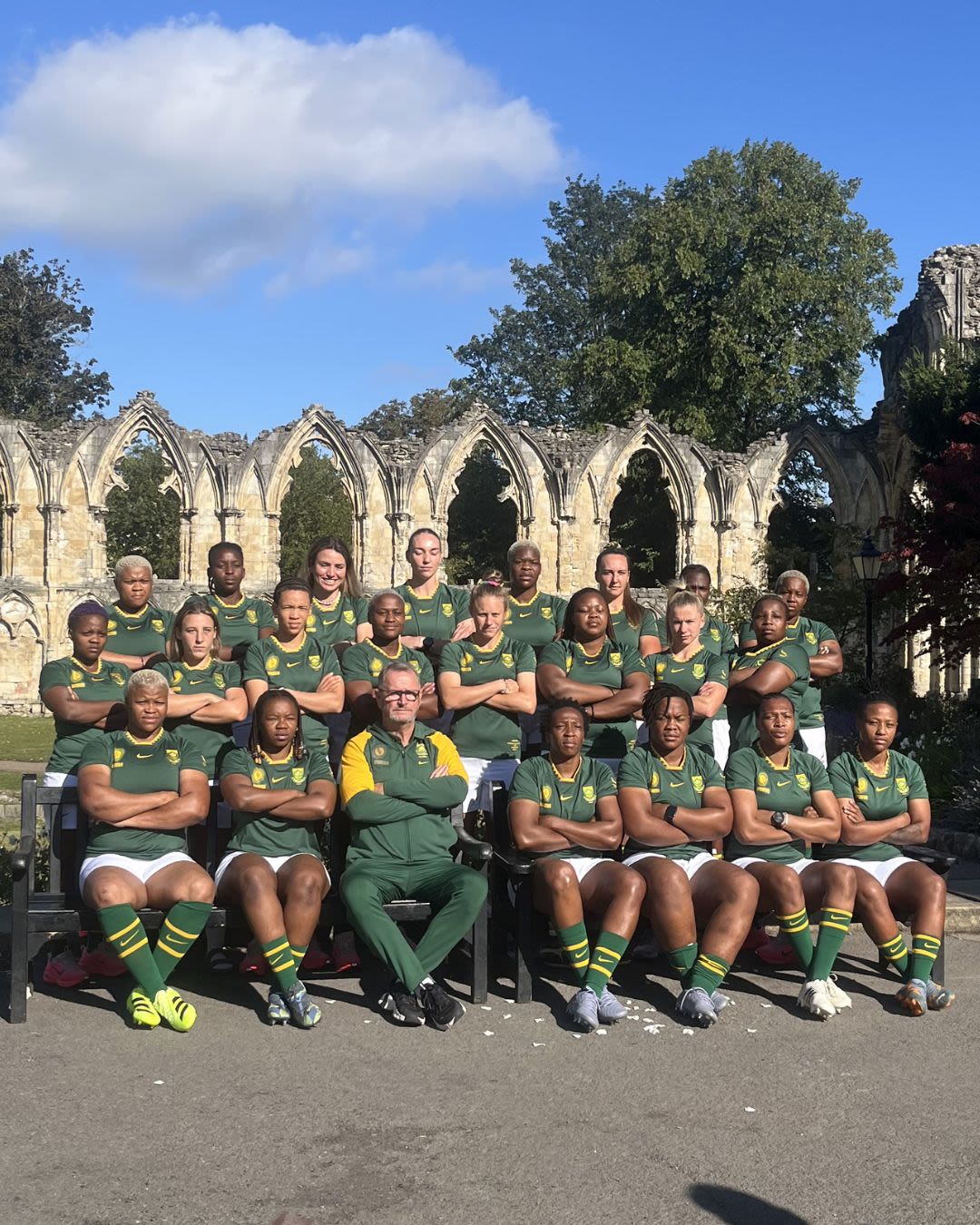
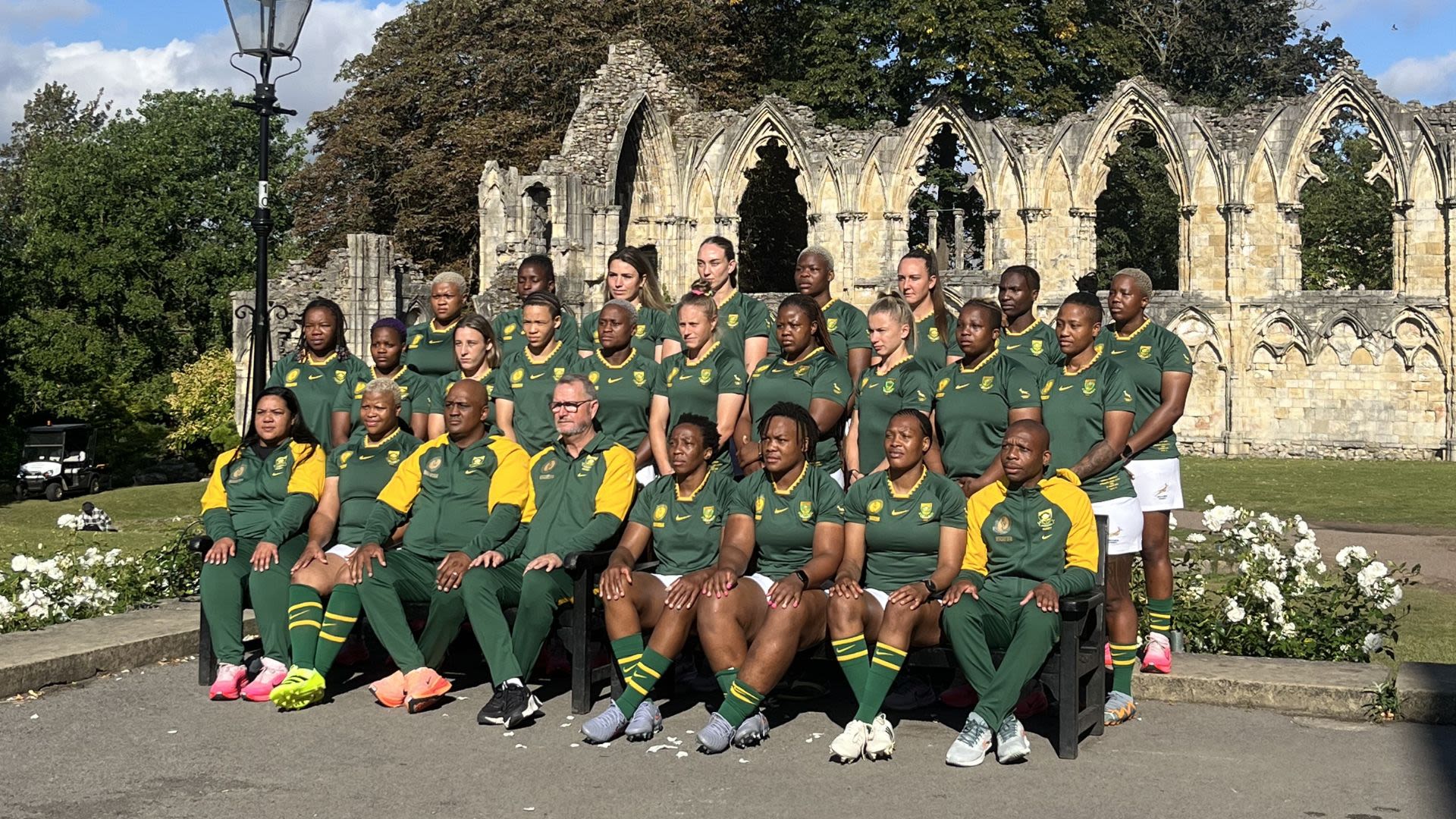
South Africa team photo in York Museum Gardens. Photo by Alfie Bugg
South Africa team photo in York Museum Gardens. Photo by Alfie Bugg
Inside World Rugby
The best ever Women’s Rugby World Cup isn’t just decided by success on the field. It takes years’ worth of work goes into creating an environment where spectators and players can thrive by the time the tournament arrives.
From the moment England was officially announced as hosts in 2022, media and organisers said that this Women’s Rugby World Cup would be the biggest in its history.
World Rugby, the organisers of rugby union world championships, wanted to ensure that ENG ‘25 was going to set new standards both on and off the pitch, and invested in their players and workforce to create an elite tournament setting.
Amongst a plethora of strategies and investments, the efficiency of World Rugby’s Rugby News Service was a key factor in making the media rollout at the World Cup the best to date.
The Rugby News Service (RNS) consists of a team of journalists and editors who gather content from the World Cup and upload it to a accessible site called the media zone. Accredited media and broadcasters can access and publish the material freely, meaning information such as team announcements, media day activity, eve-of-match briefings, and matchday coverage can reach all corners of the globe at lightning speed.
Consultant for World Rugby, Seb Lauzier, has helped run the Rugby News Service for several tournaments and was a key figure in its successful rollout at the 2025 Women’s Rugby World Cup.
He said: “We set out to deliver a world-class service for accredited media and rights-holding broadcasters in four languages: English, French, Spanish and Japanese. These are the official tournament languages and are used by a large portion of our audience. Doing this would allow the World Cup to have the biggest possible reach.”
World Rugby recognised that, despite progress, there is still inequality in the sports media industry, so in 2025, they made a commitment to show that women belong in careers in sport. Lauzier’s RNS ran its first-ever internship programme, where 12 positions were offered to undergraduate and postgraduate students.
“We wanted to champion the women’s game, and explore how we could build a network of female journalists for the tournament and beyond,” he said. “50% of our RNS reporters were female, of which some have gone on to work in the sports media industry after the tournament finished.”
Lauzier needed a strong team of editors and reporters to collect and turn around all the content produced at the media events. Learning from past tournament experience, the role of the RNS reporters is something he put a specific focus on last year.
“Unlike the Rugby World Cup 2023 in France, where there was just one RNS reporter per city, this time we had two,” he said. “This enabled us to have far greater flexibility and coverage. We prioritised our quotes services and matchday coverage as those were the most important resources for the media and broadcasters based on feedback from other tournaments.”
The RNS team published almost 4,000 individual pieces of content into the media zone, with quotes, pictures and videos used by publications around the world. Thanks to Lauzier and his team, over 7,000 users were able to utilise content on the Media Zone, making this World Cup one of the most talked about in Women’s Rugby history.

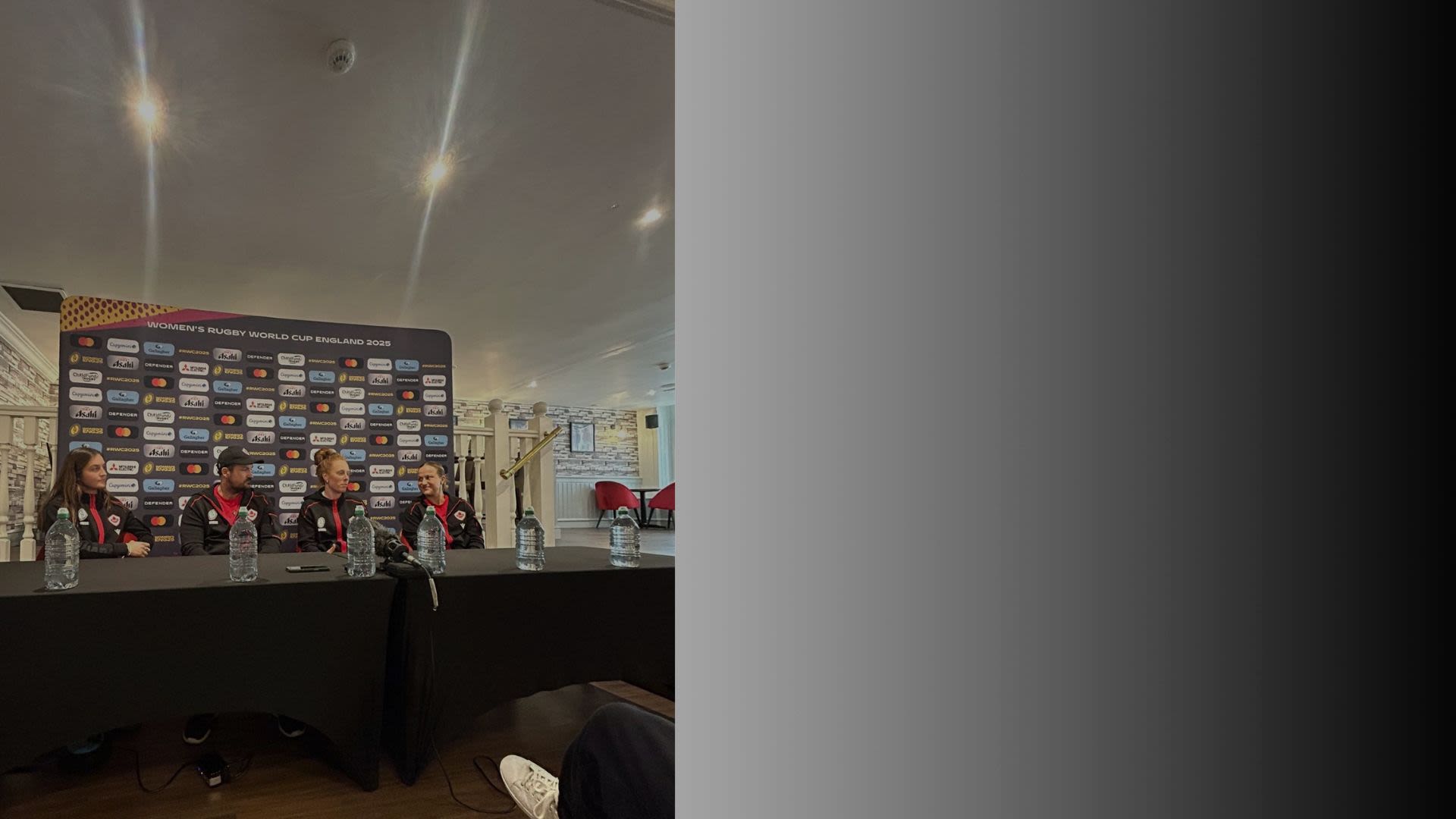
Embracing Women's Rugby Fans New and Old
Fans are the heartbeat of any Rugby World Cup and join their teams for every euphoric high and agonising low. In 2025 it didn't matter if you'd been a fan for six days or 60 years, it was all about showing your support for women's rugby.
One of the biggest successes at England ‘25 was just how many people turned out for women’s rugby. Whether in person, where 93% of all tickets sold out, or from home, where global viewing increased by 336% compared to the previous tournament, it was clear that fans new and old were invested in the summer’s biggest sporting event.
And these fans are here to stay. Organiser research found that while 44% of spectators were attending their first-ever women’s rugby match, 96% of women and girls said they were not going to make it their last.


Sold-out Allianz Stadium for the 2025 Women's Rugby World Cup Final. Photo by like tears in rain via Wikimedia Commons
Sold-out Allianz Stadium for the 2025 Women's Rugby World Cup Final. Photo by like tears in rain via Wikimedia Commons
“In the World Cup 2022 they had good crowds in the stadium, especially when there were three matches on in one day,” he remembers. “But in 2025, most games were sold out, and it was for one match per day. It wasn’t just when a big team was playing, it was every single match, and to see that growth in just three years is so special.
“You see fans come down to see Ellie Kildunne, to see Hannah Botterman, you see fans come to see these personalities at PWR games now. People who they’ve seen at the World Cup they want to watch play for their local team. I think it’s so important that you have people come to watch the World Cup and want to stick around afterwards.”

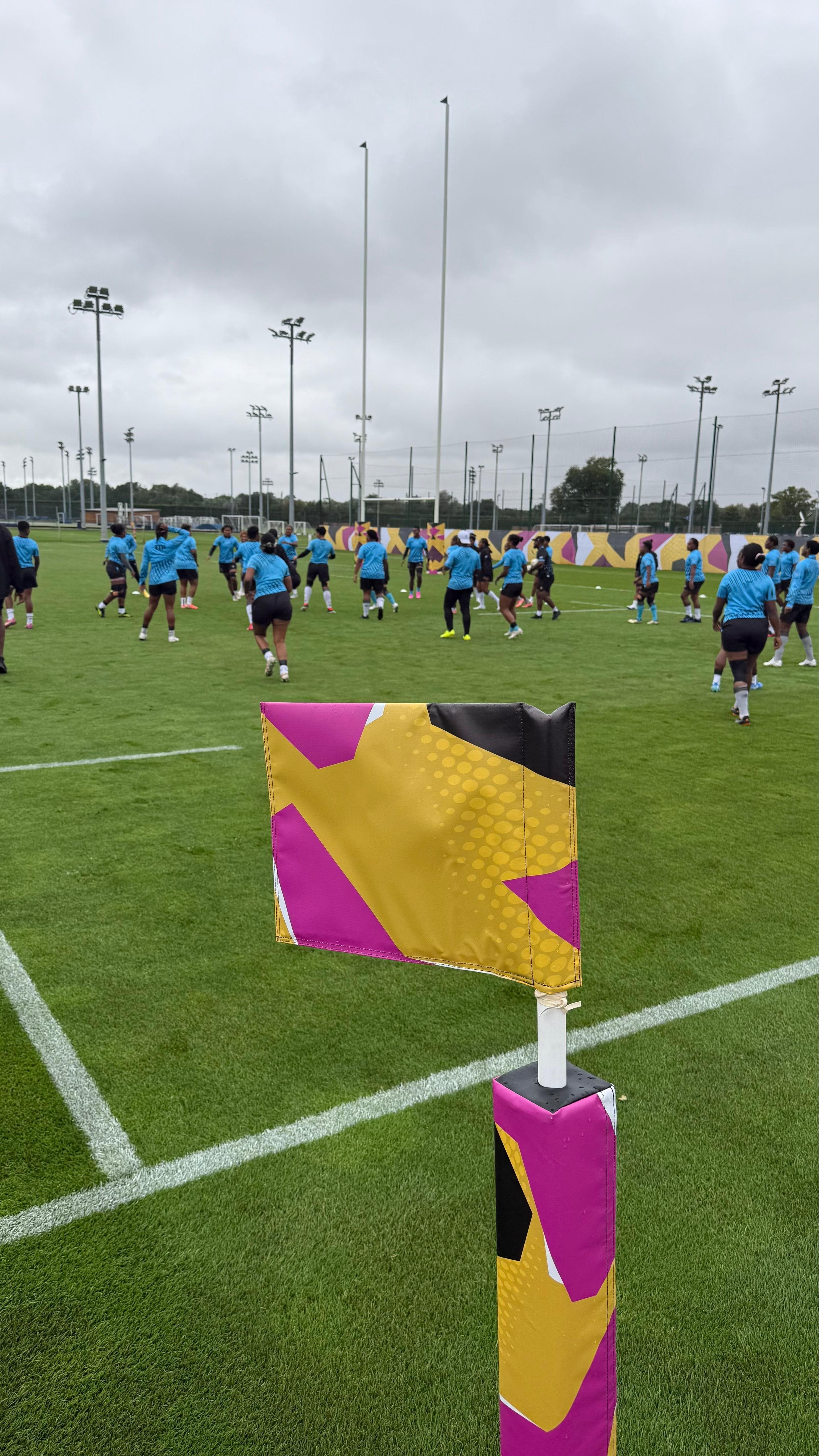
Team training session ahead of a World Cup match. Photo by Alfie Bugg
Team training session ahead of a World Cup match. Photo by Alfie Bugg
“There were some (Women’s Rugby World Cup's) I didn’t see- and that’s not because I didn’t want to, I just didn’t know they were on”, she said. “I think today they’ve done such a good job of championing the competition, all young girls everywhere should be watching and thinking, ‘that could be me,’ because I know I would have liked to do that growing up.”
When players aren’t representing their country on the world’s biggest stage, many of the World Cup’s biggest stars battle it out in the Premiership Women’s Rugby. The PWR is the premier cup competition of women’s rugby in England and arguably the biggest women’s club rugby competition in the world.
The Women’s Rugby Show has covered the PWR since 2021 and has witnessed its development across a number of years. Host Sam Bytheway has been with them for the entire journey, interviewing players and coaches stretching back to the last World Cup in New Zealand. After attending that tournament three years ago, Bytheway has seen firsthand the increase in support for women’s club rugby through national competitions.
Whilst global stars capture the imagination of millions of young girls around the world, the sport continues to prove that the influence of women’s rugby has no age limit.
Denise Butterworth, who turned 80 last year, has been a rugby fan for almost 60 years, and finally got to watch her first-ever Women’s Rugby World Cup game when the tournament came to York last year.
She said: “It was amazing to see other teams from around the world. Canada played in York, who were ranked second in the world, and I learned on the radio that they had to fundraise $1,000,000 to support their team!
“All the teams that played in York were a credit to their country, and it just goes to show what us ladies are capable of when we’re given the opportunity to play rugby- or any sport.”
Having followed rugby for over half a century, Butterworth can’t believe the progress that’s been made with women’s sport and insists that there’s never been a better time to get involved in women’s rugby.
Grassroots Impact
The legacy of ENG ‘25 is still being written to this day, long after the Red Roses lifted the World Cup trophy in September. Women and girls across the world are joining initiatives to ensure the impact of this Rugby World Cup is felt for generations to come.
Hosting international sporting events as large as the Rugby World Cup can shape a generation of future athletes. In England, you only need to look as far back as the Women’s European football championships in 2022 to see how a competition can captivate a nation, inspire young players, and change the perception of how women’s sport is viewed.
To have a multigenerational impact off the pitch, the 2025 Women’s Rugby World Cup had to do more than just host a six-week tournament - it also had to facilitate and encourage participation in rugby across the entire world. ENG ‘25 provided funding for grassroots projects globally so that women and girls everywhere could ride the wave of rugby fever and play the sport with no barriers to entry.
The eight host cities were able to access exclusive funding so that rugby could continue to prosper in the communities where the world’s best performed last summer. Paula Stainton, of the York City FC Foundation, has been working closely with the City of York Council to organise events for local residents.
“The Rugby World Cup wanted to create a legacy around women and girls taking part in rugby in a campaign they call Thrive ’25,” she said. “We already did a lot around women and girls’ sport, particularly football, so we were well placed to do something a little bit different with them.”
“We’ve been using our platform to deliver T1 rugby to them, although I knew that if we’re trying to engage new women and girls into rugby, you don’t sell it as rugby, you sell it as wellness, and so we’ve been running women’s wellness sessions where they get the opportunity to take part in a T1 rugby session!”

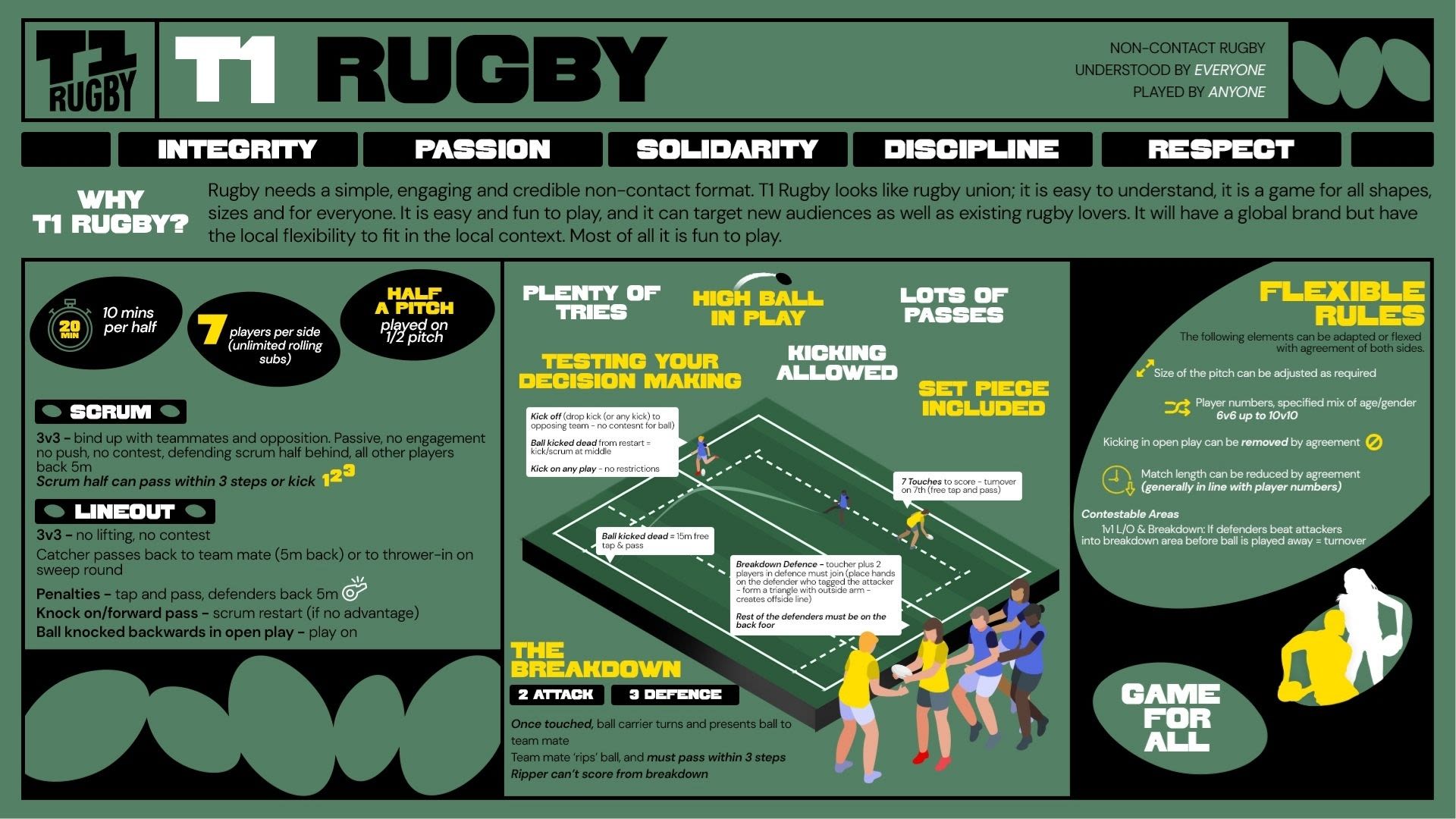
What is T1 Rugby? Infographic by Alfie Bugg
What is T1 Rugby? Infographic by Alfie Bugg
Across the community, Stainton engages with a variety of demographics to deliver activities that get women involved in rugby. The wellness sessions take on many forms, from meditation to hypnotherapy. Working with local colleges and the council, lots of people have been able to benefit from the activities.
“We’ve worked with York College to deliver some sessions to the sports students, but also their non-sports students too,” she said. “We contacted their student services to get their hair and beauty students, early years and care students - anybody that isn’t traditionally into sport - and get them a little bit interested.
“Within five minutes, they’re having fun, laughing, they’re all talking to each other, listening to the coach and asking questions. I remember we were having a quick water break, and I heard two girls as they were filling up their water say, ‘I wish we could do this every week’, and I thought, ‘that’s it! That’s perfect’.

“We’ve been working with the council to bring in coaches to set up community grassroots sessions, so if you’ve attended our sessions and enjoyed the rugby, we can give you three other sessions that are taking place at local rugby clubs.”
Professional rugby stars may perform in front of thousands every week, but they wouldn’t be in the places they are now without picking up a ball and playing in their local community first. In the week before the Black Ferns’ opening World Cup game in York, players took time out of their title defence preparations to visit a local school in to inspire young girls to take up rugby.
Iritana Hohaia, who made her first appearance in a World Cup last summer, remembers her journey to wearing the black jersey, and how important access to rugby is for the women’s game.
She said: “I’m the youngest of five, and all my siblings were very active in rugby. So they gave me the inspiration to get out there and give it a go.”
“In our team, service is a big value for us. So any chance we get to connect with the communities, share, and give back to the younger generation coming through is great. We really love it as a team, and it’s definitely cup-filling for us as athletes. No one’s journey is the same, and it gives us a different perspective on different people’s journeys.”
The YCFC Foundation also recognises that while inspiring young women and girls remains important, a specific focus should also be put on creating events where age would be no barrier. That’s why Stainton also ran sessions for mums, aunties and older sisters.
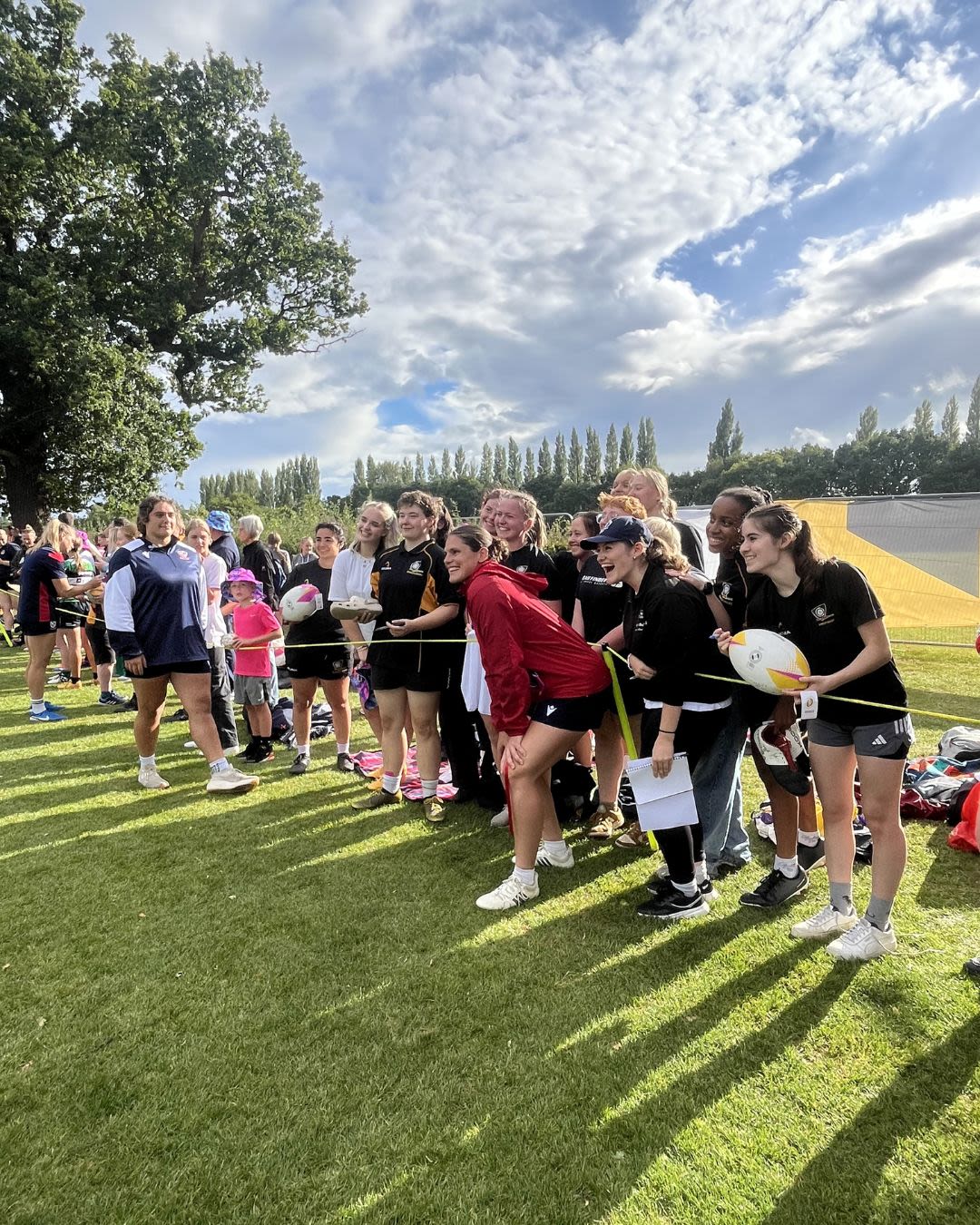
Rugby star Ilona Maher poses for photo with the University of York Women's Rugby team. Photo by Alfie Bugg
Rugby star Ilona Maher poses for photo with the University of York Women's Rugby team. Photo by Alfie Bugg
“We run a women in business network,” she said. “So we’re probably talking ages from 30’s to late 50’s as a ballpark. So it’s completely varied.”
She believes that this, coupled with the T1 rugby sessions, allows all women to benefit from the Rugby World Cup funding and get people involved in activities they wouldn’t normally do.
“It’s about breaking down barriers in terms of accessibility,” she said. “We generally find that, no matter what sport, if you’re not used to being involved in something, knowing what to do, where to go, getting through that first session is the biggest barrier.
“If it’s female role models on the pitch or off, if you can see it, you can be it.”
Over £12.3 million was committed to funding packages to guarantee the legacy of this Rugby World Cup doesn’t end at the final whistle. While many moments on the pitch stand out, it could be the choices that are made off it which the tournament is remembered for most .
Next Stop: Australia
Current World Cup conversations are rightly focus around England ’25, but for women’s sport to continue to grow we must not reminisce for too long. The end of one contest only starts the countdown to the next, and Australia ’29 will have ambitious goals to produce another unforgettable summer.
Players and organisers put everything on the line to make the 2025 Women’s Rugby World Cup the best on record, and in just over three years’ time they’ll be back to do it all over again in Australia. England raised the bar in 2025, and it will be paramount to the success of women’s rugby that the momentum keeps going down under.
Nathan Williamson, the lead journalist for Rugby.com.au, covers all aspects of Australian rugby, from the Wallabies to the Wallaroos and everything in between. Reflecting on the World Cup last year, Williamson was particularly impressed with how the English public were galvanised by the tournament, and hopes that this is something that could happen in his native Australia next tournament.
“Seeing how much England got behind not only the Red Roses, but the entire tournament was the biggest success for me,” he said “You see fans in England women’s jerseys, and if they’re not in that they’re in the red cowboy hat for Ellie Kildunne. It goes beyond simply supporting the England team because you’re English.”
“Last year set a really high bar in terms of the crowds, in terms of the investment and in terms of the impact, so for me I’d be trying to replicate that as much as possible.”
Emily Chancellor, who captained the Wallaroos in two matches during their journey to the quarter-finals last year, remembers fondly the energy that was at the tournament in England and how it spurred them on to an iconic performance against the USA:
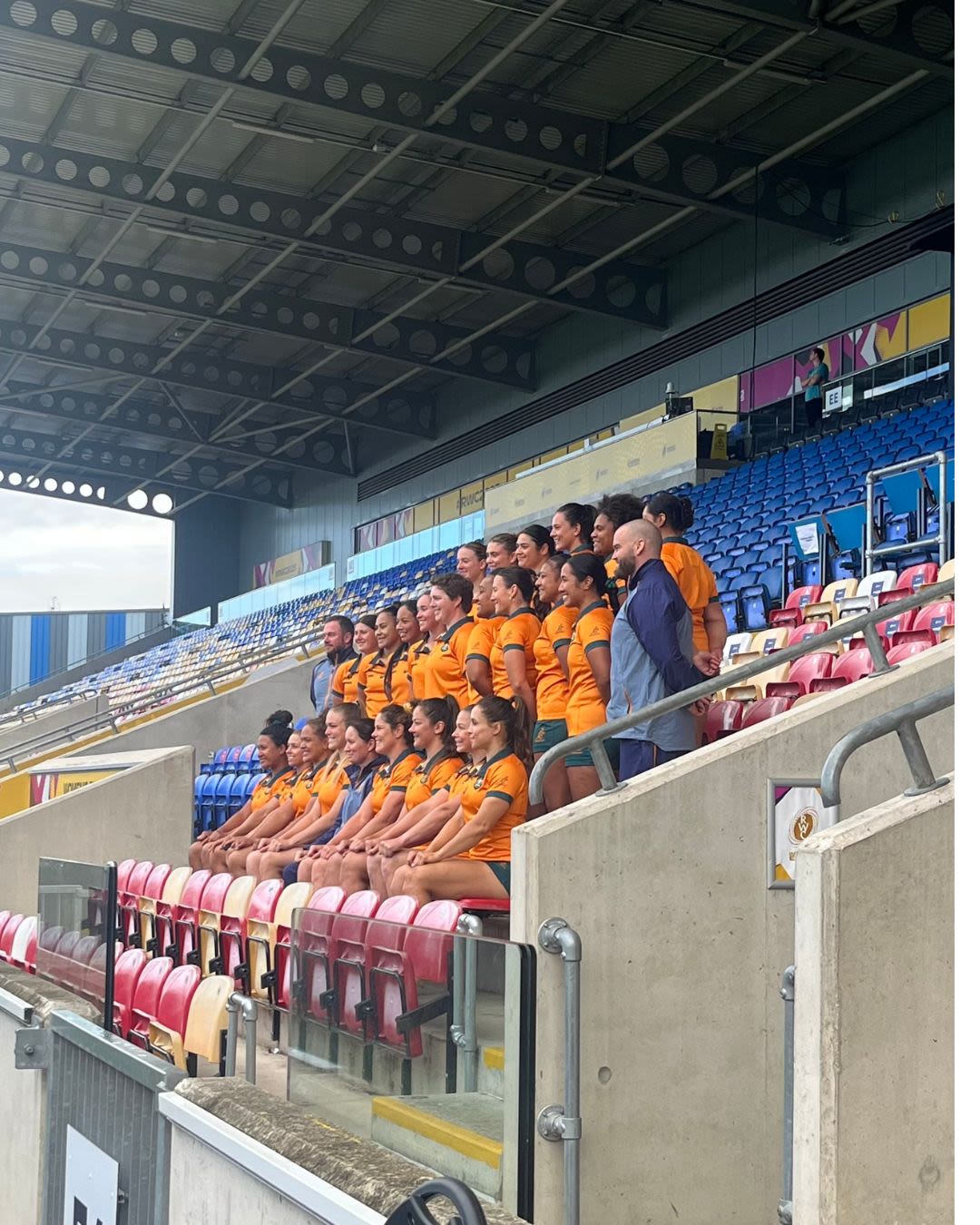
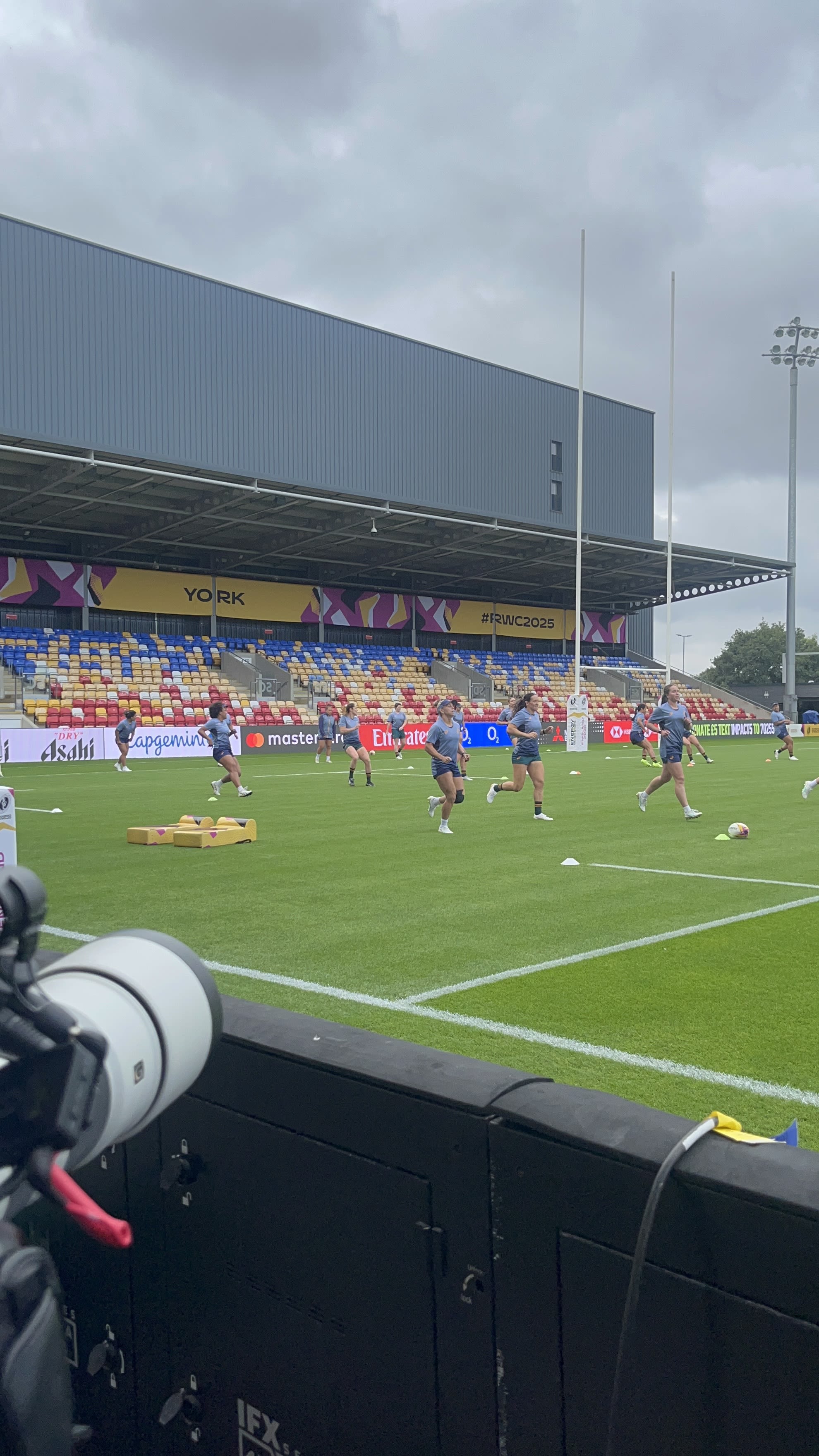
Australian squad pose for picture inside the LNER Community Stadium. Photo by Alfie Bugg
Australian squad pose for picture inside the LNER Community Stadium. Photo by Alfie Bugg
Beyond Australia’s individual success, Williamson hopes that the recent exponential growth in women’s rugby can continue, and his nation can organise a tournament of the same calibre as ENG ’25.
“In terms of what I want to see from the tournament, I’d love to see the final sold out early, and at a big venue. I’m talking about gates allocated, and no tickets available. But also, I would want 2029 to be the moment which sparks the 15s side of the game in Australia in terms of women’s rugby. There’s still a long way to go in terms of rugby unions’ positioning in women’s sport in Australia, so that’s where the biggest change would have to come from an Australian perspective.
“I think by 2029, we’ll have the stadia, we will have the infrastructure to lift the tournament and make it really special.”
“The crowds were wonderful, we heard them supporting us and the USA. The audience, the participation, and the vibe of the whole World Cup was absolutely wonderful.
“And to walk around after and take selfies with the crowd was really cool.”
Rugby is one of the most followed and played sports in Australia, mainly because of the different formats that are popular in the country. Rugby 7’s is the more popular variation in women’s rugby down under, and to be in a medal-winning position by 2029, Williamson believes more emphasis should be put on the 15’s to create a competitive side.
“It’s such a crucial World Cup for Australian Rugby to get all those pieces aligned and put together a team - put together a performance - which reflects the talent this country has,” he said. “In the past couple of World Cups, England have been hosts and favourites going into it, in 2021 New Zealand hosted and were favourites, I hope come the final weekend in 2029 we’re still fighting for a medal.”
 Built with Shorthand